
Cybersecurity & QR
QR phishing: how the trick works and where it breaks
Fraudsters do not break the code. They invent a reason for you to scan it yourself. So protection starts not with technology but with one question: why did this code appear here, right now.
Not sure about a code? The scanner shows the address before it opens.
Check a code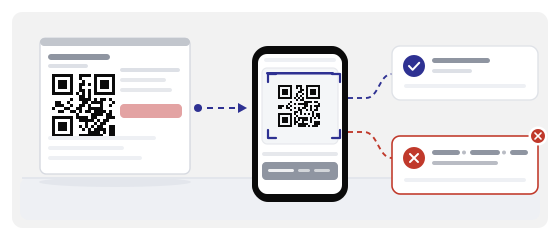
What it actually looks like
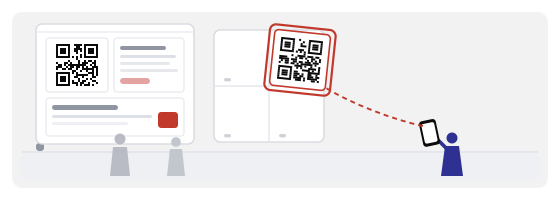
Nothing exotic. A sheet of paper in the lift: “your building's meters have been replaced, submit the readings by code”. A fake fine notice pushed under the door. A sticker on a parcel locker. A poster by the entrance announcing a payout.
None of that is the code, it is the story around the code. The little square promises nothing and deceives nobody: it simply leads where it was told to lead. The deception is created by the paper it is printed on.
One more detail that is easy to miss: fraudsters rarely count on a single person. They want volume — a stairwell, a queue, an office where a hundred people see one sticker and ten of them tap.
Why it works better than an email
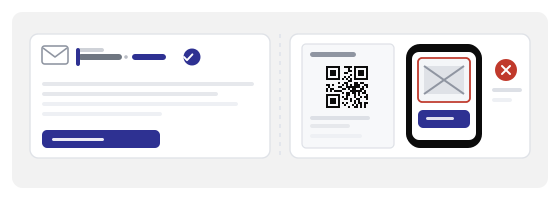
In an email you can see the sender's address and often smell something off. In a QR code you see nothing until you tap. The phone shows one button and that is the whole interface.
The second reason is trust in paper. A printed notice with a stamp looks more official than an email in a mailbox, even though it cost the fraudster a few coins at a copy shop.
The third is the action itself. Scanning feels like “looking”, not like “following a link”. People do not think they are deciding anything.
Three stories that keep coming back
All three share the same shape: they ask for something small and quick. Nobody asks you to transfer money — they only ask you to “log in” or “confirm”.
What makes a forgery convincing
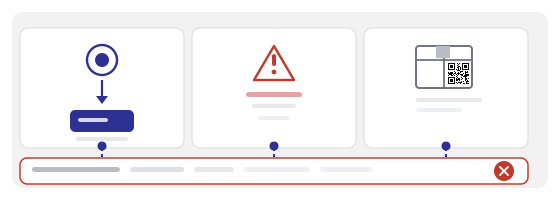
Not the print quality. Conviction is built from small things that are trivial to copy.
- The real logo, lifted straight off the organisation's site.
- An address that looks official: one letter changed, an extra hyphen, a different domain ending.
- Your name or flat number — easy to take from public lists.
- A push for urgency and one specific deadline.
- A page that looks exactly like the real one, because it is a copy.
Where the trick actually breaks
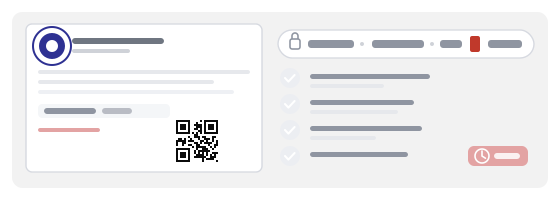
QR phishing has one weak spot, and that weak spot saves more people than any warning poster: the address is visible before you follow it.
Show a person what is inside the code before the page opens and most schemes fall apart. The sticker promises “pay your fine” and the code holds an unfamiliar domain made of three random words. That is enough to stop.
Our QR scanner is built to show the content and check it for anything suspicious before offering to open it. It is the same two-second pause a normal camera does not give you.
Where such codes lead
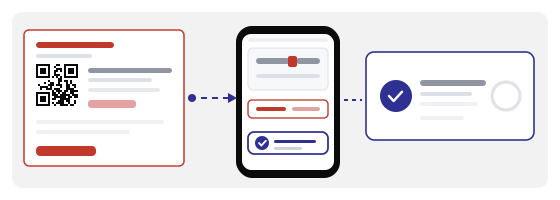
Most often to a clone page asking for a login and password. Less often to a form asking for card details. Sometimes into a messenger, where a “support agent” continues the conversation by voice.
A separate category is the request to install a file. That is no longer password theft, it is an attempt to reach the whole phone. No institution asks you to install software from a QR code on a printed notice.
A real page never rushes you. Only the one that needs you not to think is in a hurry.
If you already typed the password
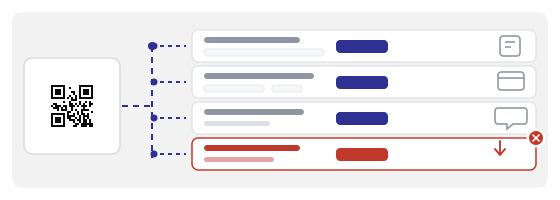
- Close the page and type nothing else.
- Change the password from a different device — not the same phone.
- Turn on two-step login if you have not already.
- Check for new sessions, new recovery emails, cards you do not recognise.
- If card details were involved, call the bank right away.
And do not be embarrassed to say it out loud. Shame is the fraudster's best ally, because it keeps people quiet while the scheme keeps running.
Who gets caught most often
Not “careless people”. Usually those who are tired, in a hurry, or dealing with an organisation they do not know well enough to recognise its real page.
Older people, people who have just moved, anyone who handles a lot of paperwork and has learned to trust what is printed. “Just be careful” is useless advice here. What works is a concrete action: look at the address before you follow it, and call the number you found yourself rather than the one printed on the slip.
If you are a business
You are part of this story too: people scan your codes on trust. So it is worth making your code distinguishable from a forgery and keeping it off unfamiliar domains.
Use a readable address. Make the code dynamic in the generator so you can change the address without reprinting the stickers on your door. Lay it out in QR Studio so the carrier shows where the code leads. And check with the scanner that your own code points exactly where it should.
A one-minute check
- Scan with the scanner, not the camera — that way you see the content.
- Compare the domain with what the sticker promises.
- If the domain is not theirs, do not follow it at all.
- Find the organisation yourself and call the number from its own site.
- Warn neighbours or colleagues: the same sticker is standing there for them too.
One minute per code is far cheaper than a week spent recovering access to your accounts.
The code is not the culprit
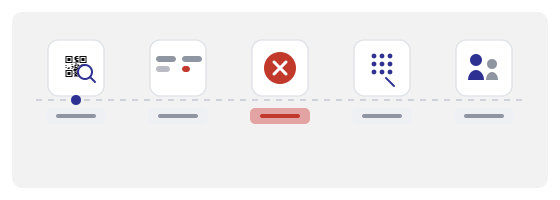
After a few loud stories people start fearing the little squares themselves. That does not help. A QR code is a carrier, like an envelope or a printed address label. The envelope is not to blame for what someone put inside it.
So the answer is not to stop scanning. The answer is to stop scanning blindly. The distance between those two habits is the whole of your security.
It also helps to remember who gains what. A fraudster needs a fast reaction from a stranger. Your delay costs them the entire scheme, and it costs you two seconds.
What to do with a suspicious sticker
- Photograph it together with the place it is stuck to.
- Do not follow the code, not even “just to look”.
- Peel it off if it is on your own premises: the next person will not have your experience.
- Tell whoever is responsible for the building, the office or the shop.
- If it is on a parcel locker or a cash machine, write to support — they have a procedure for this.
The worst thing you can do is walk on and say nothing. That way the sticker keeps working for weeks.